18 June 2013

Final Refit Details

We arrived back in Harlingen midday on Monday after our weekend shake-down cruise. With us we had a short list of arisings that needed attention. While Zonder Zorg is a hundred-and-five years old, that is on the outside only; inside, she is completely new. As with many new installations, there are tweaks and adjustments necessary that are discoverable only with use. We found several. One of these was the hand sink in the heads; in the standard Dutch fashion, it was plumbed for cold water only. The easy fix was to add a mixer to its feed line under the galley sink.

Another item was that a right-hand propeller had been installed instead of the left-hand I had requested. I much prefer a left-hand screw because of the ease of handling alongside starboard-side-to. When the engine is put astern, the stern kicks to starboard, nicely pulling it alongside. When leaving, the forward turning screw pulls the stern to port, moving it nicely away from the wall.

We motored Zonder Zorg around to the travel lift to be hauled and have the propeller exchanged.

The lift was quick and very efficient.

The retaining nut was heated and undone.

The propeller was then heated and then thumped off the tapered shaft end.

The new 22 X 20 LH screw was introduced to the taper, heated and snugged up with the retaining nut, which was then locked in place with a setscrew into a shaft dimple.

While the barge was out of the water, we had a good look at the original registration number stamped into her side in 1908. The S831N signifies that she was the 831st ship registered in Sneek in the Netherlands. Above the number is a line of original rivets joining iron plates in her century-old hull.

While we were out of the water, we had a new through-hull installed just below deck level on the port bow. This is to reroute the water tank breather line, which had been badly routed and had allowed water to overflow into the bilges when we had filled-up the fresh water tanks.

After the very quick and efficient work, we went back into the water and motored around to work wharves on the south side of the site. Shortly after we secured, a Lemmeraak rafted outboard. We counted seventeen boats being worked on in the water and on the hard, and inside the hangars there are another eleven vessels being built or refitted; every space is full. This is an extremely busy yard with over fifty workers and seemingly more work than they can handle, while other yards are idle.

Work immediately resumed, with such things as adding reenforcement webs to the main engine room hatch and installing new sound-deadening insulation.

We also had a locking latch installed, so that we can lock-up the engineering spaces when we leave the boat.

While work progressed, we kept ourselves busy adding interior details. The bedroom is spacious and comfortable, with lots of convenient hanging points. The washing machine and dryer are nicely tucked-away under the foredeck, and we gave them several loads to work with.

On our first trip to Ikea we had picked-up a MemoryFoam pad to put on top of our mattress; the bed is superbly comfortable.

We love the clean simplicity of the interior, and the wonderfully convenient cabinets behind sliding doors all along the starboard side. There is more than enough storage.

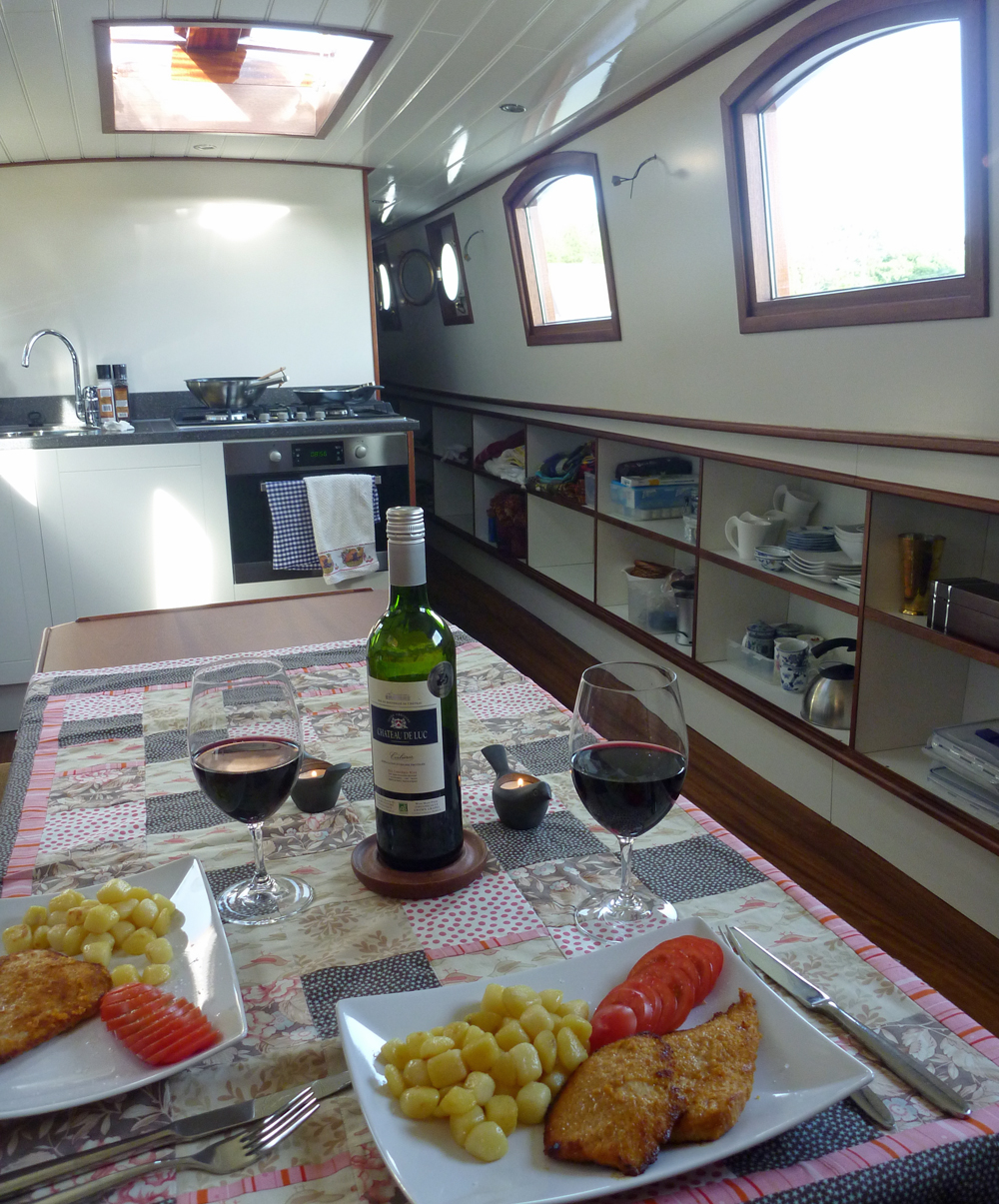
The galley is very well laid-out, with everything ergonomically arranged and conveniently placed. We have thoroughly tested the dishwasher. At 45 centimetres width, it is just large enough to swallow in one load everything that we use to prepare and enjoy breakfast, lunch and dinner.

The fridge sits conveniently under the port side-deck and is sufficiently large to store several days of food. Although with shops and supermarkets being very plentiful often within a short walk or cycle from the canals, we don't need to stock-up like we did in Sequitur during our three years sailing around South America.

Of course we have tried-out the new galley repeatedly, and it has consistently produced wonderful meals.

The last few details are being addressed and it appears that we will be ready to head out tomorrow morning. We look forward to many years of zonder zorg cruising in Zonder Zorg.

11 June 2013

Back to Friesland

On Sunday morning the 2nd of June we rolled our ten-piece luggage train the block and a half from our Vancouver loft to the SkyTrain for the ride to the airport. Our flights took us without hitch via Montreal to Brussels and we breezed through Immigration, with Edi’s new Dutch passport allowing us to do the very short EU Passports line; the Other Passports line looked thirty or forty minutes long.

Our car was waiting for us at the Hertz Gold Counter and less than three hours later we were looking across the canal at Zonder Zorg. She looked wonderful in her new colours. Her leeboards had not yet been installed, and we could see work underway with hatches open fore and aft, one of the entry doors standing on the side deck and the carved artwork leaning against a shoreside hangar wall. 

After a quick visit aboard, we went up to the office to announce our arrival to Klaas and to get an update from him on the progress of the work and to find out where our stored bins were. We were shown to a third-floor loft in one of the hangars, where from our pile of belongings we selected two bins in which we could see tableware, stemware, cutlery and cooking utensils and vessels, and we lugged them down to the boat. We then hauled our ten pieces of luggage onboard from the car and drove into town shopping for ingredients for dinner and breakfast. 

Back onboard we unpacked and began organising. The rough sorting was easy with all the sliding doors removed from the fronts of the compartments. There are twenty-two compartments running all the way along the starboard side. With six each in the salon, galley and bedroom and four across from the heads, sorting by place of use was simple. The five drawers and two cupboards beneath the galley countertops easily swallowed everything we threw at them and still seemed almost empty. The bins beneath and behind the settee are huge and they remained nearly empty.

While Edi continued to sort, I prepared dinner. There were no cooking pots in the bins we had brought down from storage, and the hangar was locked for the night. With just a wok and a sauté pan to work with, we skipped the green beans amandine and had a simple meat and potatoes dinner. At 2200 we dragged ourselves to bed, thirty-one hours after we had sprung out of bed in Vancouver.

The next morning we saw Sfinx sitting in the slip around the corner from us. She was one of the three tjalks we had winnowed to our short list from the seventeen we looked at. Looking at her and at Zonder Zorg now, we are delighted with our decision. Looking at the tangle of rigging on Sfinx, we are thankful that we decided not to restore Zonder Zorg to sail; the rig would have been in the way most of the time for the style of boating we want to do now.

Through the following four days, as the yard workers tended to some of the remaining small details aboard, we hauled more things down from the storage loft, We also shopped around in Harlingen for an espresso machine, a bean grinder, a toaster and other comforts of home. On Wednesday and Thursday we made trips to Ikea in Groningen and each time came back with a stuffed car. Thursday afternoon we bought two lightly used bicycles in a shop in downtown Harlingen, and in the evening we tried them out with a grocery shopping trip into town. On Friday we returned the rental car to the Hertz office in Leeuwarden and took the train back to Harlingen.

On Saturday morning we headed out in Zonder Zorg for a shakedown cruise to try out her various systems. We found a very simple and practical way to secure the bicycles aboard, with a fender on the mast tabernacle and a bungee cord. The sluit cover makes a perfect wheel chock.

We headed up the Van Harinxmakanaal toward Leeuwarden under scattered clouds in gusty crosswinds. Among the many boats we saw were a few sailboats on beam or broad reaches along the canal.

Zonder Zorg’s new larger diameter propeller gives her helm a much more stable feel. Previously, the tiller needed to be tended full time, and with considerable effort. Now, the tiller can be let go for short periods and it is much easier to handle.

We motored through Faneker and admired the canal-side homes, many of them with mooring slips where driveways would be in less boat-oriented parts of the world.

We turned off the main canal into a narrow one heading southward. The sign at the canal entrance confirmed the notations on the chart that gave the maximum bridge clearance of 2.4 metres, but with Zonder Zorg's 1.95 metre air draft, we easily passed under.

We wound our way through pastures and tiny villages for a few kilometres, and then turned off the small canal into a tiny one and secured alongside in a tiny wilderness park.

Earlier in the week we had paid €12 for an annual membership in De Marrekrite, a recreation group that provides 3500 free mooring spots at 285 locations throughout Friesland. For the fee we received a burgee which allows us a year of free moorage and map to all the locations. We settled-in and relaxed. It may take us a while to become accustomed to this pace, but we are confident that with practice, we eventually will.

30 May 2013

Zonder Zorg is Re-Launched

This morning we received a batch of photos showing the completed paint job. Zonder Zorg has a rather fine complexion for a 105-year-old lady.

Proudly wearing her new colours, she was ready to be rolled-out and prepared for re-launching.

She was picked-up by a low crawler and moved toward the water.

Her new four-bladed screw and freshly refinished rudder look wonderful.

Here we see some detail of the new stern bearing, shaft and propeller, as well as one of the protective anodes.

She was slung and gently lowered into the water...

... and for the first time in over six months, her bottom is wet again.

Before she was out of the slings, work resumed aboard. There are still many details to be attended to to make her liveable before we arrive on Monday, but we are assured that we will be able to move in upon arrival. Even then, we know there will be small things needing completion, tweaking, adjusting and refining. We look forward to moving aboard and making her our home.

28 May 2013

Which Way to Go?

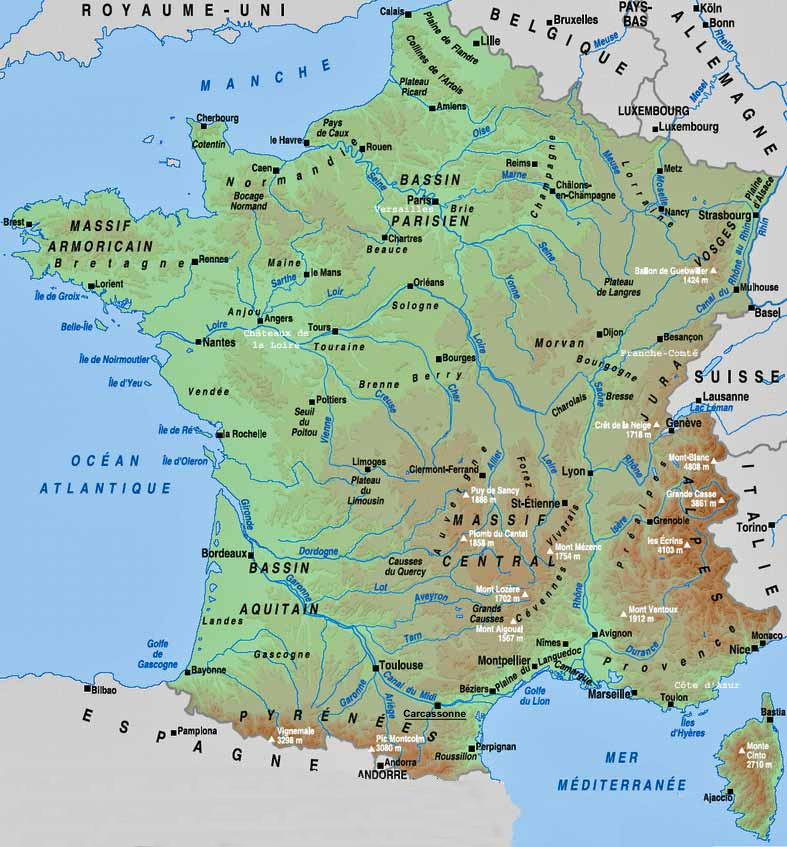
There are over 45,000 kilometres of navigable rivers and canals in Europe. That is more than a circumnavigation's worth of inland waterways to explore. In France alone, there are over 8,000 kilometres. We are faced with many decisions in taking Zonder Zorg southward from Harlingen toward our planned wintering port in Carcassonne on the Canal du Midi.

Our initial intention after we have moved aboard and settled-in, is to spend some time doing a thorough shake-down of Zonder Zorg by wandering around the canals of Friesland. Once we are satisfied that all systems are working properly, we want to take a meandering route through Noord Holland, Utrecht, Gelderland and Limburg to Maastricht and then head into Walloonia along the Maas.

Our experience, and that of so many before us, tells us to quickly make our way through Belgium. The Maas is the shortest route through and is also reputed to be the most pleasant. Once we enter France at Givet, we will be faced with many choices of routes to take us through northeastern France, but it is a rather safe bet that our first destination will be the Champagne.

Onward from the Champagne, we can opt to continue via Paris, with the decision of whether to go by way of the Marne or the Aisne, Oise and Seine. From the Seine above Paris we can choose to continue on the Loing, Briare, Loire and Centre to the Saône, which entails 554 kilometres and 157 locks; or possibly take the more scenic Yonne, Nivernais, Loire and Centre, which is a bit longer and has a few more locks; or we can take the Yonne and Bourgogne to the Saône, which is shorter at 401 kilometres, but has more work with 214 locks.

Alternatively, if we decide to give Paris a miss on this trip, we can follow the Aisne a la Marne, the Lateral a la Marne and the Canal entre Champagne et Bourgogne to the Saône, or we can do the Marne a la Rhin and Canal des Vosges to the Saône. An additional eastern alternative is to continue along the Marne a la Rhin into the Alsace, then southward and take the Rhône au Rhin to the Saône. The route we take will depend on many factors: how much time we have, how many locks we feel like doing, what history and culture we want to see, and what we want to eat and drink. Whichever route we take, we have to get to the Saône. Six different routes meet at or near St-Jean-de-Losne on the Saône, and the town is rightly considered the centre of the French waterways system. I had based my previous canal boat there between 2000 and 2006.

Southward from St-Jean-de-Losne, there are no alternatives. We will follow the Saône until it empties into the Rhône at Lyon and then follow the Rhône to just short of the Mediterranean, where we will branch off into the Canal du Rhône a Sète, which will lead us to the Canal du Midi and along it is Carcassonne.

However, first we need to get from Vancouver to Harlingen, and that is less than a week away.

25 May 2013

Planning Ahead

When we were in Southern France in mid-February on our way back to Friesland from Spain, we stopped in Carcassonne and Narbonne to investigate possibilities for winter moorage. To hedge our bets, we applied to both. Now after three months of communicating and negotiation, we are delighted to have secured a place for Zonder Zorg in the Port de Carcassonne.

The Port is located adjacent to the exclamation triangle symbol on this bicycle map. It is at the edge of Ville Basse, which is referred to as the New Town. New because it dates only to 1247, when Louis IX founded it below and across the River Aude from La Cité, the fortified citadel on the hill.

The first settlement in the area dates back about 5500 years, but it wasn't until about 2100 years ago that the Romans fortified the hilltop. In 462 the Romans formally ceded the province of Septimania to the Visigoth King Theodoric II, who had captured Carcassonne in 453. Through the following thousand years and more, Carcassonne was the target of attack by seemingly everyone with any aspiration to power in Western Europe. Among these were the Goths, Franks, Saracens, Burgundians, Moors, Albigensians, and the Cathars.

Carcassonne is home to about 50,000 people. It is about mid-way along the Canal du Midi from the Mediterranean to Toulouse, and is within a few kilometre from being the most southerly part of the French canal system. A major portion of its businesses is tourism, centred around La Cité and the Canal du Midi, both UNESCO World Heritage Sites. Wine growing is also a major focus here, it being in the heart of the Languedoc-Roussillon wine region, with many famous areas, such as Minervois, Corbières and Limoux nearby. We look forward to a pause there.

The Painting Continues

Another batch of photos arrived from Friesland overnight, showing some details of the continuing painting. Here we see the stem looking forward from the front of the foredeck. The insides of the bulwarks are now painted and drying, waiting for the masking for the application of the nonskid coats to the decks.

Turning around and looking aft, we see the tabernacle, spud leg caisson and propane boxes have been painted black to match the gunwale tops.

Aft in the cockpit, there is a nice view down through the after engine room hatch at the generator. Seen around the periphery of the hatch is the rich ivory paint drying and awaiting masking for the nonskid application.

Here is the view forward over the roef. Soon this will become a familiar sight to us as we wend our way slowly southward through the canals of the Netherlands, Belgium and France.

24 May 2013

Painting Progress

While all the technical things were being installed and hooked-up in the engineering spaces, work was progressing on Zonder Zorg's exterior painting. Earlier, the old paint had been removed from the roef and the surfaces were prepared and primed. We had chosen an ivory colour for the roef, for us a more pleasing and slightly warmer colour than the previous white.

The first finish coat was applied a few days ago.

For her hull beneath the rubbing strake, we chose a navy blue, and for the topsides we decided on a rich burgundy. We opted for these darker colours on the hull because the previous white too easily showed rust weepings. We thought that we could find better things to do than frequent cosmetic touch-ups.

The rubbing strake and the gunwale tops are in black. Our thinking here is that with these being the most commonly chipped, chafed and worn areas as the barge is manoeuvred in and out of canal locks, black would be the easiest colour to match and the simplest to apply without looking patchy.

Now that the initial colour coats are on, we are told that Zonder Zorg is being moved today to another shed for the application of the finish coats. We look forward to receiving photos of the finished project. We look even more forward to seeing it in person in ten days.